
Exploring the Golden Age of Crime Writing
What the Golden Age Actually Was
The Golden Age of detective fiction is usually dated from the end of the First World War to the early 1950s — roughly thirty years in which the clue-puzzle mystery became a national pastime. The phrase was popularised by the critic Julian Symons, but the books it describes share one firm promise: the reader is given every clue needed to name the murderer before the final page is turned.
It was a period of astonishing productivity. Readers wanted entertainment, a puzzle to solve on the train home and a world in which order was reliably restored; writers wanted to be read; and both sides accepted a set of conventions that made the game possible. The result was a genre so tightly patterned that you can still feel its influence in almost every whodunnit published today.
The Rules of Fair Play
Golden Age writers were not simply playing a game — they were playing a game with rules, and many of them set those rules down in print. The conventions of the fair-play mystery were surprisingly formal:
- The detective must not know more than the reader. Every deduction in the final chapter should be traceable to a clue planted earlier.
- No supernatural solutions. Ghosts, telepathy and convenient dreams were considered cheating.
- The murderer must appear early. Usually within the first few chapters, often in a position of trust.
- Coincidences are allowed, but only against the detective. A lucky break may interrupt an investigation; it must never solve it.
- The solution must be the only one that fits. A clever ending that contradicts an earlier chapter is a betrayal, not a twist.
The best of these books wear their machinery lightly. You notice the rules only in retrospect, when you realise how neatly you were managed from page one.
Agatha Christie and the Perfect Puzzle
No one managed readers better than Agatha Christie. Across sixty-six detective novels she perfected the art of making an outrageous solution feel entirely inevitable. Her methods were practical ones. She kept her cast to a manageable eight or twelve suspects, gave each an alibi with one vulnerable edge, and planted her most important clue in plain sight — often inside a sentence so ordinary that thousands of readers skimmed straight past it.
Her favourite devices were the least likely suspect and the least likely weapon; her greatest strengths were pace and ruthlessness. She also gave the genre one of its most durable structures: the closed circle, a group cut off from the world by snow, an island or a country-house weekend, so that the murderer must be among them. Try The Body in the Library for a clean demonstration of the form, A Murder Is Announced for the fairest set of clues she ever laid, or Murder on the Orient Express to watch her bend the rules without ever quite breaking them.
Dorothy L. Sayers and the Thinking Detective
Where Christie was a purist, Sayers was an enthusiast. She pushed the form towards the novel of character and ideas, and her detective, Lord Peter Wimsey, is as memorable as any of her solutions. In Strong Poison she introduces Harriet Vane, a crime novelist on trial for poisoning her former lover, and the resulting books are as much about reputation, work and independence as they are about whodunnit.
Gaudy Night is barely a murder mystery at all — a novel about a woman's education and the cost of an intellectual life, wrapped around a campaign of poison-pen letters in an Oxford college. The Nine Tailors is a study in campanology and village hierarchy. Sayers researched obsessively: bell-ringing, cryptography, advertising, wine, tides. Her books take longer to read than Christie's and repay the effort. If you like your mysteries with social comedy, a plausible love story and a genuine puzzle underneath, she is your starting point.
Making a Cosy Space for Classic Crime
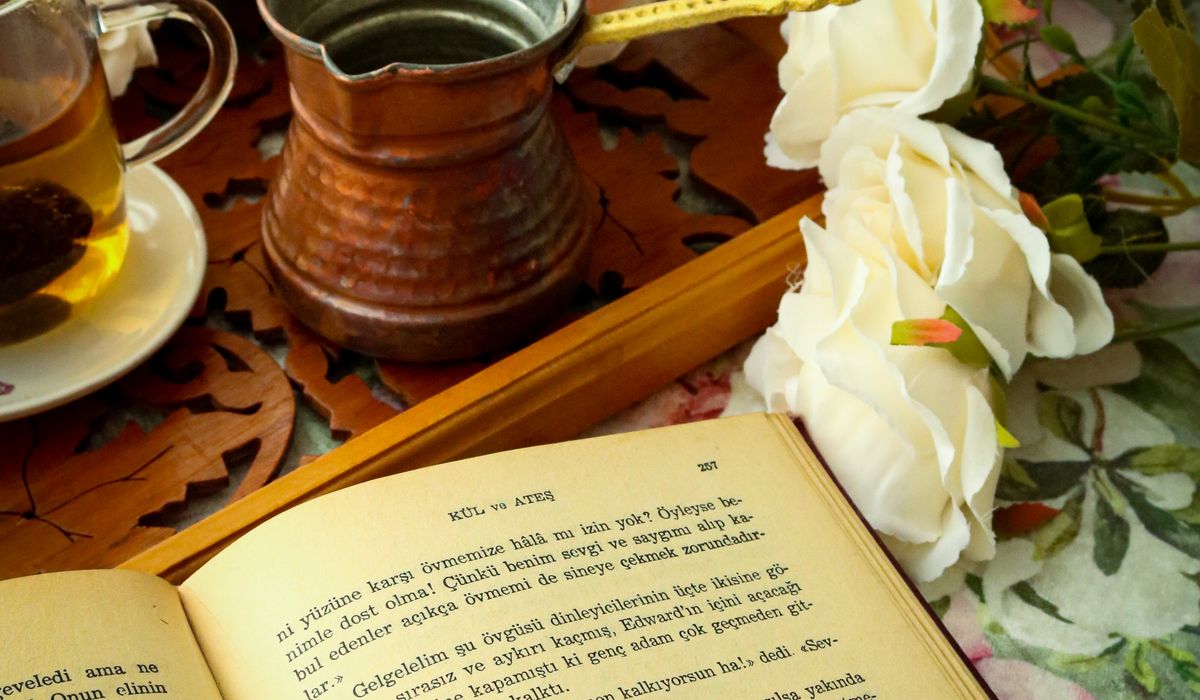
These novels are short, neatly chaptered and devilishly moreish, and they reward a particular kind of reading environment. A few practical suggestions:
- One good lamp behind your shoulder. Overhead lighting flattens a page; a warm pool of light makes a chapter feel like an occasion.
- A chair with arms, and a blanket within reach. Golden Age crime is written for the long winter evening, and it knows it.
- Physical editions where possible. The clue-puzzle depends on flipping back — "wait, who was in the library at ten past nine?" — and that is far easier with paper.
- A notebook and pencil. List the suspects, their alibis and the timings. Sayers would thoroughly approve.
- Tea, or something stronger, and no phone. Interruption is the enemy of deduction.
- Read two or three chapters a night. That rhythm gives the plot room to settle without giving you time to forget the details.
Set the scene deliberately and you will find that the books hold up better than memory suggests. They were written for exactly this: a quiet room, a warm drink, and an hour in which the world is a solvable puzzle.
Where to Begin, and Where to Go Next
If you are new to the period, start with the shortest books and work outwards. Then widen your shelf:
- Dorothy L. Sayers — Strong Poison, then Gaudy Night
- Josephine Tey — The Franchise Affair and Brat Farrar, both quietly brilliant
- Ngaio Marsh — Surfeit of Lampreys for atmosphere, A Man Lay Dead for the template
- Margery Allingham — The Tiger in the Smoke, her darkest and finest
- John Dickson Carr — The Hollow Man, a masterclass in the impossible crime
- Edmund Crispin — The Moving Toyshop, for readers who like their puzzles witty
Secondhand bookshops and charity shops are full of these titles, often for the price of a coffee, and that is part of the pleasure: a battered paperback with a cracked spine and someone else's initials on the flyleaf. Buy three or four at a time and keep them by the chair. The Golden Age endures because it offers comfort and cunning in the same volume — a world where order is restored, and where you could, if you were paying attention, have worked it out all along.
tag: Crime Fiction

Amelia Forsythe Author
These celebrated works blend observation, memoir, and landscape history, encouraging readers to look more closely at the natural world around them.
YOU MAY ALSO LIKE

Five Nature Writing Books to Inspire Your Walks
Jul 22
10From farming diaries to island life, these memoirs offer honest, evocative accounts of remote communities, seasonal rhythms, and the challenges of rural living.
read more
The Best Memoirs About Living in Rural Britain
Jul 20
10Question the author's sources, consider the context, and compare multiple perspectives to build a richer understanding of past events and interpretations.
read moreBook Reviews
-

ERRIC CATONA
Choose a welcoming venue, pick a mix of classic and contemporary poems, and let discussion flow without pressure to find the 'right' meaning.
May 19, 2016 at 5.12 pm
Reply
ERRIC CATONA
From romantic odes to modern reflections, these poems capture the sea's power, mystery, and enduring hold on the British imagination.
May 19, 2016 at 5.12 pm
Reply -
ERRIC CATONA
Short, intense, and often profound, poems fit easily into a lunch break or commute, offering moments of reflection in a crowded day.
May 19, 2016 at 5.12 pm
Reply
Author Interviews
Your email address will not be published.