
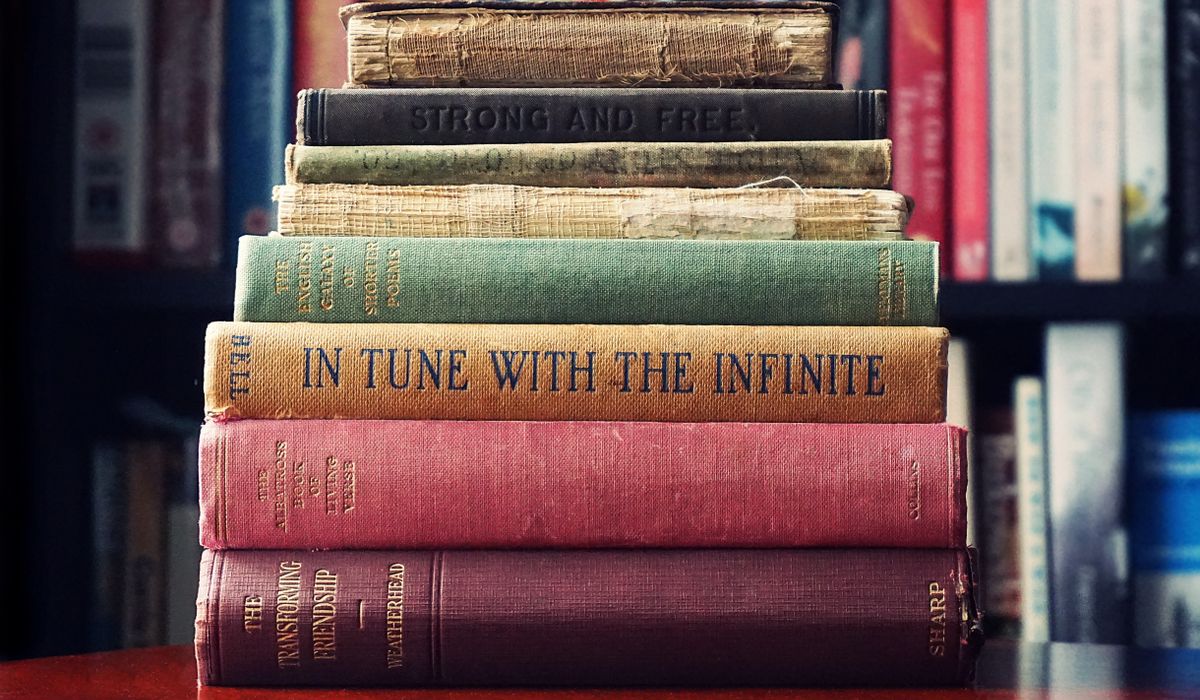
Five Ways to Build a Home Library on a Budget
Start With Charity Shops — and Learn to Look Properly
Britain is quietly excellent at second-hand books. Almost every high street has at least one charity shop with a shelf or two tucked near the back, and the prices are still startlingly reasonable: paperbacks for 50p to £2, hardbacks rarely more than £3. The trick is not luck but rhythm. Pop in once a week rather than once a season, and vary your days — weekday mornings tend to catch stock straight from the sorting room, while Saturday afternoons bring the bargain-bin clear-outs.
Then learn to inspect. A charity shop paperback can be a bargain or a false economy, and the difference takes about thirty seconds to spot:
- Smell it. A musty, damp or cigarettey whiff will spread to the books beside it. Walk away.
- Check the spine and hinges. Cracks, tape repairs and loose pages mean it will fall apart mid-chapter.
- Look at the pages, not the cover. Heavy foxing, water staining or a child's felt-tip artwork inside are all reasons to leave it.
- Glance at the copyright page. An older printing of a much-loved novel is often better made than a modern one.
Also check the glass cabinet by the till, where volunteers usually put anything older or rarer. You will occasionally find a £40 book marked at £4 because nobody recognised it.
Library Sales, Village Halls and the Gentle Art of the Swap
Your local library is one of the cheapest sources of books in the country. Withdrawn stock sells for as little as 20p a paperback, and ex-library hardbacks — often in sturdy plastic jackets — go for a pound or two. Many branches hold a permanent sale trolley near the entrance, so there is no need to wait for a big event. Ask at the desk whether they keep a list of forthcoming sales; the larger annual ones are worth an early arrival, as the first hour is when the good stock moves.
Beyond libraries, look for the small, unglamorous events that rarely get advertised widely:
- Jumble sales at church halls and community centres, where books are often sold by the bag.
- Village hall book fairs, usually run by a reading group or a fundraising committee.
- Car boot sales — arrive at opening, bring cash and small change, and be willing to haggle on a bundle of five or six.
- Street-side book boxes and swap shelves in cafés, station waiting rooms and community centres. Take one, leave one.
Swapping is the cheapest method of all, provided you can let go. If a book has sat unread for three years, it is doing nothing on your shelf that it could not do on someone else's.
Buy Second-Hand Online Without Paying Over the Odds
Online marketplaces make almost any title findable, but postage quickly destroys the savings on single purchases. The fix is to buy in bundles from one seller: fill a basket with four or five titles from the same shop and the delivery cost is spread across them all. Always work out the cost per book including postage before you commit — a 1p book with £3.50 delivery is an £3.51 book.
Read the condition notes carefully. Terms like "reading copy", "ex-library" and "previous owner's inscription" all mean something specific, and honest sellers say so. Keep a running wishlist in a notebook or on your phone, and add books to it rather than buying on impulse. Prices on older editions drift up and down, so patience genuinely pays.
Spend Where It Lasts
A budget library is not the same as a cheap one. Buy paperbacks for novels you will read once and pass on, and save your money for the books you will return to: reference works, cookery, poetry, illustrated editions, anything with maps or plates. These are the books worth having in hardback, and they are also the ones that hold their value longest.
Two more habits help. First, resist duplicate copies — check your shelves before you buy, because it is astonishing how often we own the same book twice. Second, ask for book tokens at Christmas and birthdays instead of guessing, and set yourself a small monthly allowance. Ten pounds a month, spent deliberately, builds a better collection than fifty pounds spent in one enthusiastic afternoon.
Curate, Don't Just Accumulate
The most satisfying home libraries are not the biggest; they are the most intentional. Aim for shelves that say something about you rather than shelves that simply contain a lot of paper. A useful discipline is one in, one out: every time a new book comes in, one leaves for a charity shop or a friend. Another is to keep a small notebook of what you have read and what you thought of it, which stops you buying the same middling thriller three times over.
Group books in a way that makes you want to reach for them — by mood, by season, by subject — rather than strictly alphabetically. A shelf arranged by feeling invites browsing; a shelf arranged by surname invites admin.
Build the Cosy Corner Around the Collection
Finally, give the books somewhere worth sitting. A reading corner costs very little: a second-hand armchair, a small side table from a house clearance, a warm lamp with a soft bulb, and a blanket within reach. Angle the lamp over your shoulder rather than into your eyes, and keep shelves out of direct sunlight, which fades spines and dries out paper.
Leave a little empty space on every shelf. Overstuffed shelves are hard on books and harder on the browsing hand, and the gaps are where the next charity shop find will go. Add a cushion, a mug, and an hour of quiet, and you have a library — no matter how modest the collection on the shelves.
tag: Reading Nooks

Amelia Forsythe Author
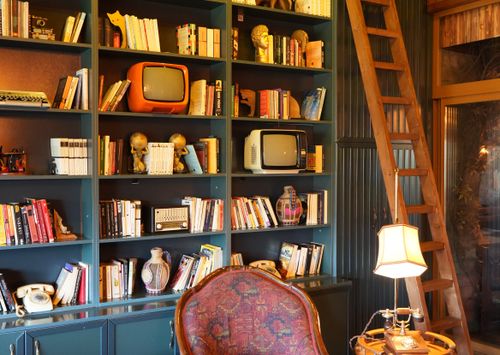
Consider back support, seat depth, and fabric durability to find an armchair that keeps you comfortable through chapter after chapter.
YOU MAY ALSO LIKE
Choosing the Right Armchair for Long Reading Sessions
Aug 20
10Austen's sharp social commentary and timeless characters continue to captivate readers, offering wit and insight into human relationships across the centuries.
read more
Why Jane Austen's Novels Still Resonate Today
Aug 17
10Emily Brontë's novel uses wild moorland, stormy weather, and haunted houses to create a brooding atmosphere that reflects its troubled characters.
read moreBook Reviews
-

ERRIC CATONA
Dickens captured Victorian London's contrasts of wealth and poverty. His vivid settings still draw readers into the city's crowded streets and shadowy corners.
May 19, 2016 at 5.12 pm
Reply
ERRIC CATONA
From locked rooms to family secrets, the country house setting offers a perfect closed circle for suspense, suspicion, and clever detective work.
May 19, 2016 at 5.12 pm
Reply -
ERRIC CATONA
Familiar investigators and evolving personal lives create a comforting rhythm, while each new case delivers fresh puzzles and satisfying resolutions.
May 19, 2016 at 5.12 pm
Reply
Author Interviews
Your email address will not be published.