
Review: The Midnight Library by Matt Haig
A library between life and death
Matt Haig's The Midnight Library opens at the worst hour of Nora Seed's life. She is thirty-five, living in Bedford, and feels she has disappointed everyone who ever mattered to her: a career she walked away from, a brother she barely speaks to, a band she left before it could go anywhere, a cat found dead on the road. Between life and death she arrives somewhere else entirely — a library with shelves that stretch past the limit of the light, presided over by Mrs Elm, her old school librarian.
Here, every book is a life Nora could have lived. Choose one and you slide into it, carrying your original memories with you. Stay as long as the life holds you. Return when it doesn't. The Midnight Library is the space in between, and the novel is a gentle, deliberately simple exploration of regret, depression and the strange arithmetic by which we decide whether our lives have been worth it.
The rules — and why they matter
The mechanism is neat. Nora tries on being a glaciologist in Svalbard, a rock star touring with her brother, an Olympic swimmer, a married woman running a country pub, a philosophy don with a flat full of books. In each version she knows what she has gained, because she also recognises exactly what she has lost.
There is a Book of Regrets, and there is the idea — quietly devastating when it lands — that the lives we mourn are rarely the lives we imagine they would have been. Haig keeps his rules spare and consistent, which is precisely why the premise works. A more elaborate framework would have buried the emotion. This one leaves room for it.
What the novel does beautifully
- Short chapters. The structure is generous to tired readers. You can steal fifteen minutes before bed and still get somewhere.
- Specific detail. The smell of chlorine, a wooden chess set, the particular silence of a house you nearly lived in. Haig knows that small objects carry the weight of whole lives.
- Honesty about depression. Nora's despair is never presented as something to be argued away. The book takes mental illness seriously without becoming a lecture.
- A genuine argument. Beneath the parallel lives is a real proposition: that regret is usually built on a false memory of how things would have turned out. The novel tests it rather than merely stating it.
Where it asks for a little patience
This is a very popular book, and it is worth being honest about its edges. The rhythm of arrive, inhabit, realise, return repeats, and by the fifth or sixth life some readers will sense the machinery turning. A few lines tip towards aphorism, the sort of sentence likely to end up on a bookmark rather than in your head forever. If you prefer your fiction ambiguous and unresolved, this may feel a shade too tidy.
One more note, offered with care: the novel deals directly with suicide, depression and grief. If those themes are close to you at the moment, it may be one to read alongside a friend, or to save for a steadier season. That is not a reason to avoid it — simply a reason to be kind to yourself while reading.
Cosy reading: making the most of it
Books like this reward atmosphere, and a little preparation pays off handsomely.
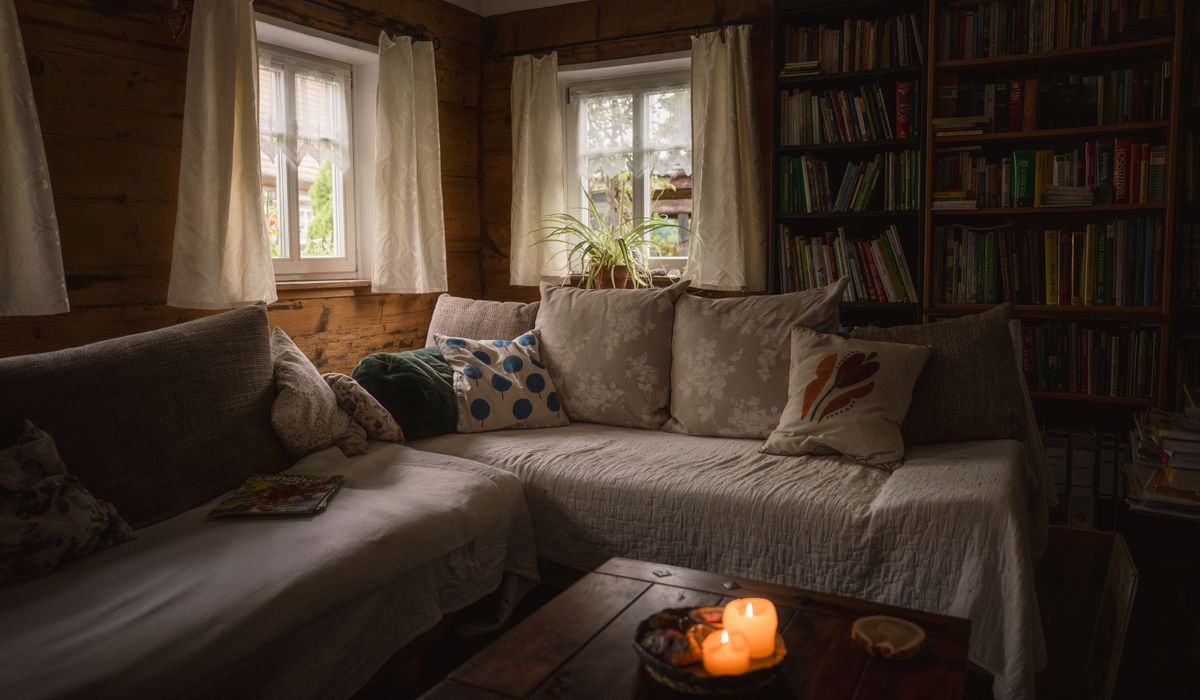
- Read in a pool of warm lamplight rather than under a cold overhead bulb — the difference in how the book feels is genuinely remarkable.
- Keep something hot within reach: a pot of tea, cocoa, or mulled something in the colder months. You will stay longer than you meant to.
- Pace it at one life per sitting. The chapters invite a chapter-by-chapter rhythm, and stopping at a return to the library is a natural, satisfying pause.
- Have a notebook nearby. The book prompts questions — about careers not taken, cities not moved to, people not called back — that are worth catching before they drift off.
- Choose your chair properly. Good back support, a blanket over the knees, and a cushion behind your elbow makes an hour feel like twenty minutes.
- If you normally read on a phone or tablet, try paper for this one. It suits the mood, and you will not be tempted to check anything.
Who it will suit — and what to read alongside it
The Midnight Library is for readers who like a novel to start a conversation rather than a puzzle. It works wonderfully for book groups, largely because the questions are easy to ask and difficult to answer: which life would you have chosen? What is on the first page of your own Book of Regrets? Would you take the deal if the offer came?
If you enjoy Haig's voice here, his memoir Reasons to Stay Alive and his novel The Humans share the same warmth and directness. For a quieter companion piece, something reflective and character-led — a novel about an ordinary life examined closely — sits well beside it. And if you finish the last page at midnight, as most readers seem to, do yourself one favour before sleeping: leave the book on the arm of the chair, and a bookmark in the final chapter. You will want to read those last few pages again in the morning, in daylight, with a cup of tea.
tag: Book Reviews

Charlotte Bevan Author
We chat with a Yorkshire-based novelist about plotting, research, and why the British landscape makes such an effective backdrop for murder.
YOU MAY ALSO LIKE

In Conversation with a Local Crime Writer
Sep 8
10A Cumbrian poet discusses walking, weather, and the quiet rhythms of nature that shape her verse and creative practice.
read more
How a Poet Finds Inspiration in the British Countryside
Sep 4
10A Bristol-based writer explains how everyday observations and playful language help her craft characters that young readers truly care about.
read moreBook Reviews
-

ERRIC CATONA
Turn a quiet corner into a comfortable retreat with soft lighting, a supportive chair, and easy access to your favourite books.
May 19, 2016 at 5.12 pm
Reply
ERRIC CATONA
From charity shop finds to library sales, discover practical tips for growing a personal collection without spending a fortune.
May 19, 2016 at 5.12 pm
Reply -
ERRIC CATONA
Consider back support, seat depth, and fabric durability to find an armchair that keeps you comfortable through chapter after chapter.
May 19, 2016 at 5.12 pm
Reply
Author Interviews
Your email address will not be published.